The cartilage problem
Articular cartilage is the smooth, gel-like tissue that covers the ends of bones at joint surfaces. It has no nerve supply and very limited blood supply — which means it receives nutrients almost entirely through diffusion from the synovial fluid that surrounds it. This limited nutrient access is why cartilage heals so slowly when damaged and why supplementation with cartilage-supporting nutrients requires sustained daily presence over weeks and months to produce measurable effects: the compounds must be consistently available in the synovial fluid to diffuse into cartilage tissue.
As people age, or as joints experience repeated mechanical stress, the chondrocytes (cartilage-producing cells) that maintain cartilage matrix integrity produce fewer structural components. The cartilage becomes thinner, less hydrated, and less able to absorb mechanical shock — leading to the increasing friction, discomfort, stiffness, and reduced mobility characteristic of degenerative joint conditions.
Glucosamine mechanism
Glucosamine is an amino sugar and a fundamental building block of the glycosaminoglycan chains that form the proteoglycan structure of cartilage. When chondrocytes produce new cartilage matrix, glucosamine is one of the essential substrates they require. With age or under conditions of joint stress, the body’s endogenous glucosamine synthesis may fall short of the demand for cartilage maintenance and repair.
Glucosamine supplementation (particularly as Glucosamine Sulfate, which has better clinical evidence than glucosamine hydrochloride) provides chondrocytes with additional substrate for proteoglycan synthesis. Published research has found that Glucosamine Sulfate at appropriate doses can reduce the rate of cartilage joint space narrowing over time — a measure of cartilage preservation — compared to placebo in randomised controlled trials spanning up to three years.
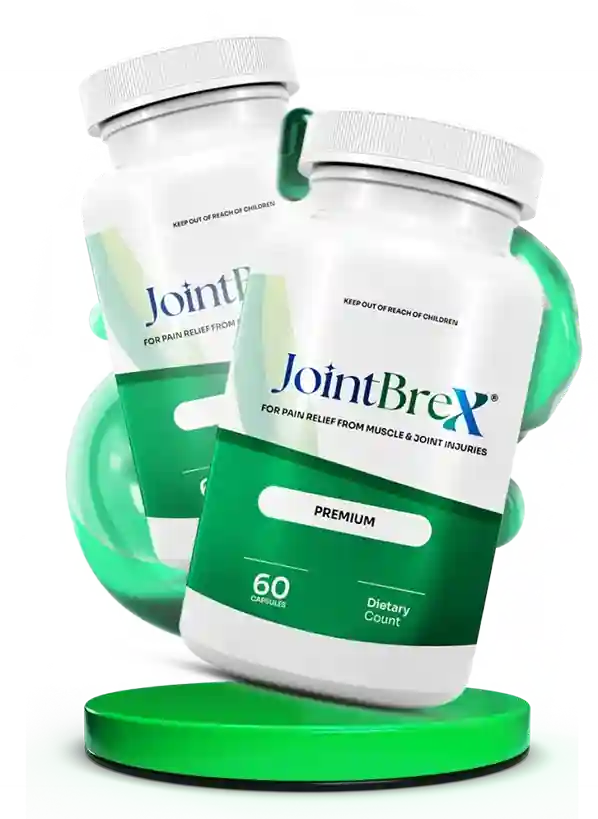
View the JointBrex formula, current pricing and the 60-day guarantee.
🧠 View JointBrexChondroitin mechanism
Chondroitin Sulfate is a complex glycosaminoglycan that is itself a major structural component of cartilage’s extracellular matrix. Its primary functional role in cartilage is water retention — the highly charged sulfate groups on Chondroitin molecules attract and hold water molecules, giving cartilage its characteristic gel-like, compressible quality. Without adequate Chondroitin, cartilage loses its water-holding capacity and becomes more rigid, less shock-absorbing, and more susceptible to mechanical damage.
Chondroitin supplementation provides the building material for cartilage proteoglycan synthesis while also demonstrating anti-catabolic effects — it inhibits the enzymes (particularly MMPs and aggrecanases) that degrade existing cartilage matrix. This dual action of supporting cartilage anabolism while inhibiting catabolism makes Chondroitin Sulfate particularly valuable in conditions where cartilage is being lost faster than it is being rebuilt.
Clinical evidence
The clinical evidence for combined Glucosamine and Chondroitin is more robust than for either ingredient individually, reflecting their complementary mechanisms. The GAIT trial (Glucosamine/Chondroitin Arthritis Intervention Trial), funded by the US National Institutes of Health, found that the Glucosamine plus Chondroitin combination produced clinically meaningful pain relief in the subgroup of patients with moderate-to-severe knee discomfort.
A meta-analysis published in the British Medical Journal analysing 10 trials involving over 3,800 patients found that combined Glucosamine and Chondroitin supplementation was associated with significant improvements in joint function scores compared to placebo. Longer-duration trials (24 weeks and beyond) consistently show greater benefits than shorter trials, consistent with the cumulative nature of cartilage support effects.
In JointBrex
Within JointBrex, Glucosamine and Chondroitin form the cartilage support core of the six-ingredient formula. Their mechanisms are complementary and non-redundant: Glucosamine provides the substrate for new cartilage matrix synthesis, while Chondroitin maintains the water-holding and structural integrity of existing cartilage and inhibits its breakdown. The four remaining JointBrex ingredients (Boswellia, Turmeric, MSM, Bromelain) address inflammatory, connective tissue, and tissue clearance dimensions that these two compounds do not cover — creating a complete joint support system from a single daily two-capsule dose.
More articles
More on the JointBrex blog. Official site for pricing and guarantee.